
INDUSTRIAL ENGINEERING
Decision Support
All businesses operate with uncertainty, whether you are dealing with uncertain manufacturing lead times and first-time-right concerns, facing a big decision on what machinery to buy or simply having too many choices and no method to evaluate. We can assist you with confident decision making and maximizing your return on investment.
A good decision making set of tools have the following characteristics in common:
Risk-free experimentation - simulating a system or modelling a decision on paper provides a risk-free environment in which multiple options can be evaluated before selection and implementation;
First time right decision making - knowing beforehand what the impact of a decision will be allows for the optimal decision to be made the first time;
Provides optimal return on investment - good decision making tools allows all possible choices to be evaluated on equal ground, so that the option with the best return on investment can be selected;
Facilitate stakeholder buy-in - stakeholders are more comfortable with decisions if it is in a language that they understand, decision making tools assist in the visualization of options and the impact thereof.
Monte Carlo Simulation
A Monte Carlo Simulation is a mathematical technique where random probability is assigned to an event in order to predict the outcome of a complex, uncertain process or chain of events.
This can be used to simulate anything including project duration, project cost, the financial impact of a decision, inventory planning, demand forecasting, manufacturing tolerances and even to approximate the value of pi.
The results can present a full spectrum of outcomes, including worst case, best case and average results.
Decision Tree Analysis
A decision tree is a tool which is utilized to evaluate different choices when the outcomes are uncertain. Decisions, probability of outcomes, costs and benefits are visualized in a tree like structure. This tool has found its place in risk assessments, business strategy and equipment management.
Financial Modelling
Any business decision has a financial impact. It makes sense to model the impact on the business's financial statements as this is how business performance are measured. However, it does not make sense to decrease a cost, but not decrease the cash outflow of the business. Most financial models stop at EBITDA, but we take it further and investigate the tax impact on the business as tax is cash flowing out of the business.
Simulation Modelling
Discrete event simulation modeling is where a model is built of an entire system such as assembly lines, logistics systems and customer service queues. This technique is used to determine system capacity constraints, queue lengths, process times, space requirements and facility layout. The biggest advantage of this technique is that several process improvement options can be visualized on a computer before implementation and impacting the system. The results hits you between the eyes as you can visualize your problem immediately.
Facilities and Operations
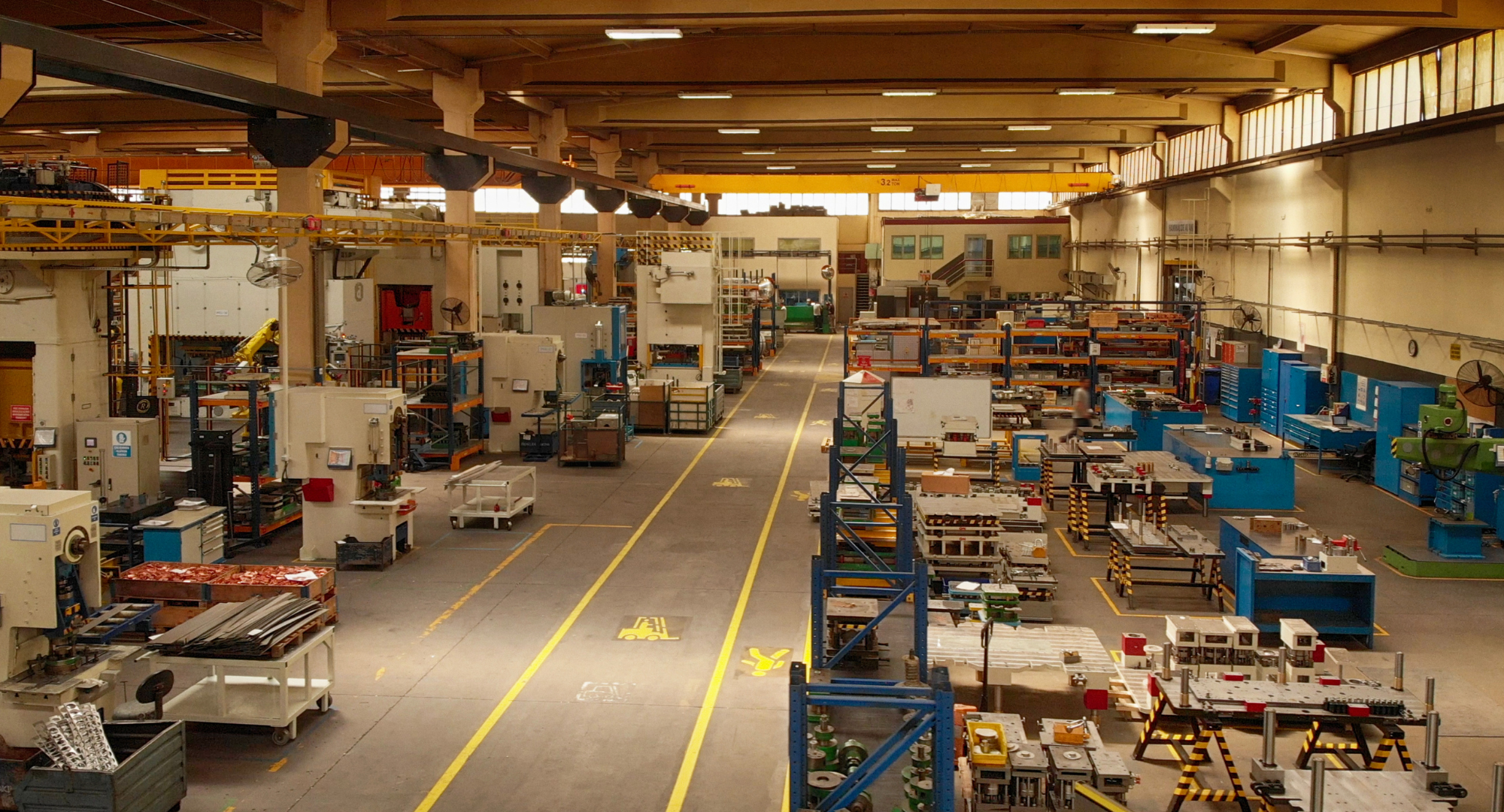
Facilities Design
"Flow, flow, flow and enough space", if we only had a million rand for every time we heard that from a client. For some arranging machines or workstations in a sequence is the one and only concern. In our facility design process, it is in the middle. We investigate and interrogate everything, from utilities to floor structures, from adequate space for maintenance to conveyor capacity between machines.
Facilities Simulation
A good design on paper is nothing without validating it. We make extensive use of simulation tools during facilities design to ensure that there is adequate spacing provision for floor inventory and suitable space for material handling equipment to operate.
Operations Optimization
The Second Law of Thermodynamics states that when a system is completely left on its own, it will naturally move from a state of order to a state of disorder. No matter how good our intentions are, inefficiencies creep in, short term plans become long term solutions and complacency sets in.
As a standalone project or in conjunction with facilities design, continuous operations optimization is highly beneficial to any business. This is where the traditional Industrial Engineering tools like Seven Wastes, 5S and old school work study is invaluable. We don't show up at your door with one or two tools in our back pocket, but with a bakkie full of operations optimization tools.
Equipment Management
Feasibility Analysis
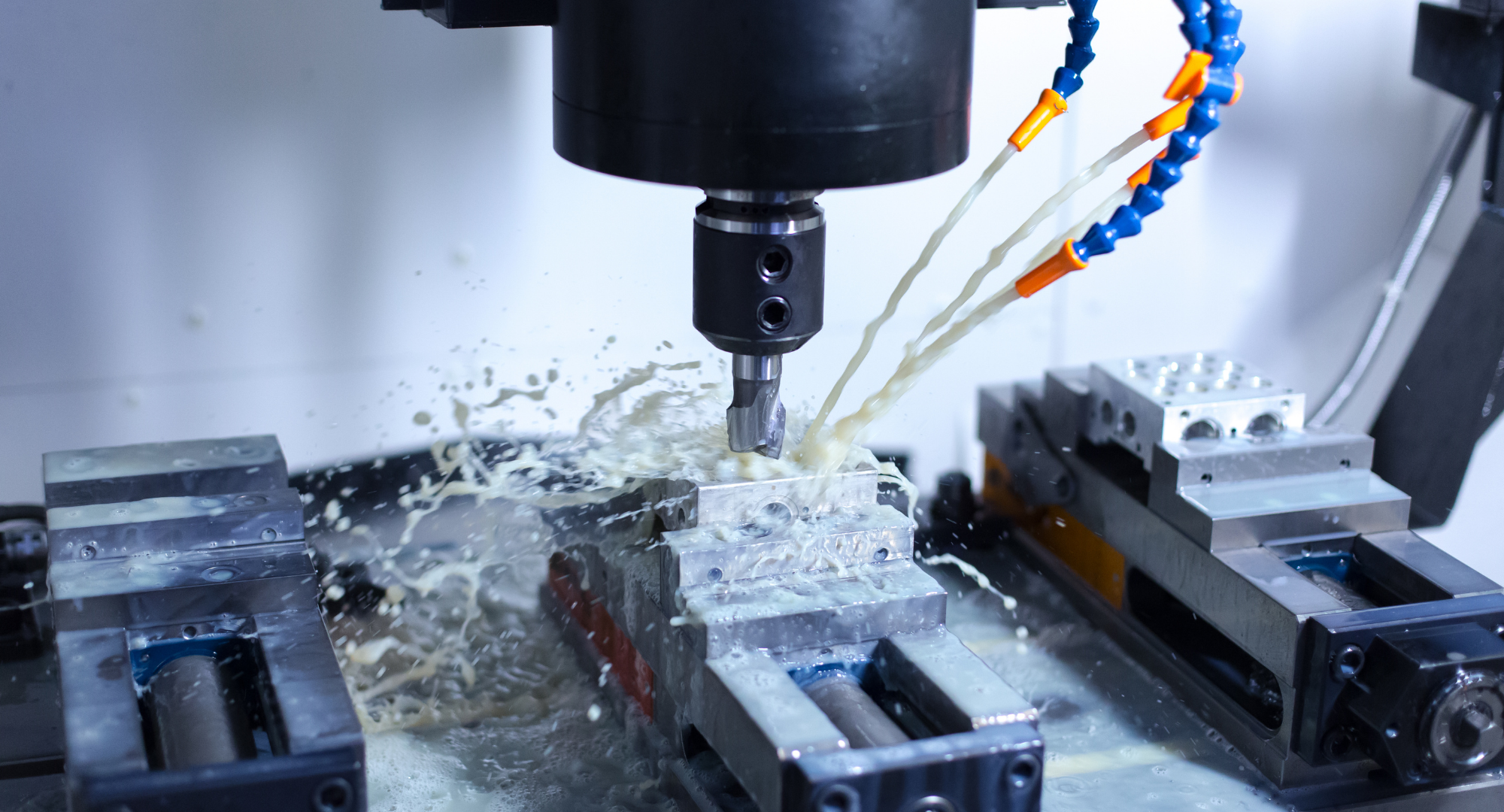
Equipment is at the heart of any manufacturing business. It determines how much product can be made, how much scrap and rework is made and how many maintenance headaches the management has. We can assist you in making the most optimal decision, whether it is to replace, refurbish, upgrade equipment and the long term strategy of ownership, to buy outright, to lease and life cycle management of equipment.
Equipment Selection
Equipment selection is no longer a matter of selecting the best that your money can buy from a specification sheet. Direct comparison between equipment on specification and capabilities does matter, but it is only the start. We look at the selection process from a holistic angle considering how this equipment will fit in into the rest of your operations, how it will be supported both internally and externally to your business, what the total turn key cost and total ownership and operations cost will be.
Preventative Maintenance
Every machine has a different maintenance philosophy. Not based on its mechanical, electrical or electronic characteristics, but based on what impact it has on your business if it needs breakdown maintenance. We can assist in developing a maintenance strategy for every piece of equipment in your operations by evaluating the effect of equipment failure on the total process capacity.

Project Management
Facilities Design Implementation
Facility design implementation involves a myriad of different industries including civil construction, utility installation, equipment rigging and transportation, equipment commissioning and even general handyman level work that cannot be overlooked. The advantage of having the design team leader and implementation team leader as the same engineer is invaluable. We have the right business relationships with industry experts to assist you with a stress free implementation.
Equipment Relocation
Even the relocation of a single machine requires careful planning and coordination. Our services cover the assessment, planning, management, and execution of equipment relocation to minimize operational disruption and ensure safe, successful implementation.
From a single machine move to a complete facility relocation, we have the expertise to manage the process efficiently and professionally.